

Why Every Package Will Need a Unique Identity
For decades, packaging identification has largely been about telling consumers and supply chains what a product is. Barcodes identify a specific product or SKU, while batch and date codes provide essential production and shelf-life information. Increasingly, however, that level of identification is no longer enough. The direction of travel is towards individual packs having their own unique identity, creating a digital connection between the physical product and the information associated with it throughout its lifecycle.
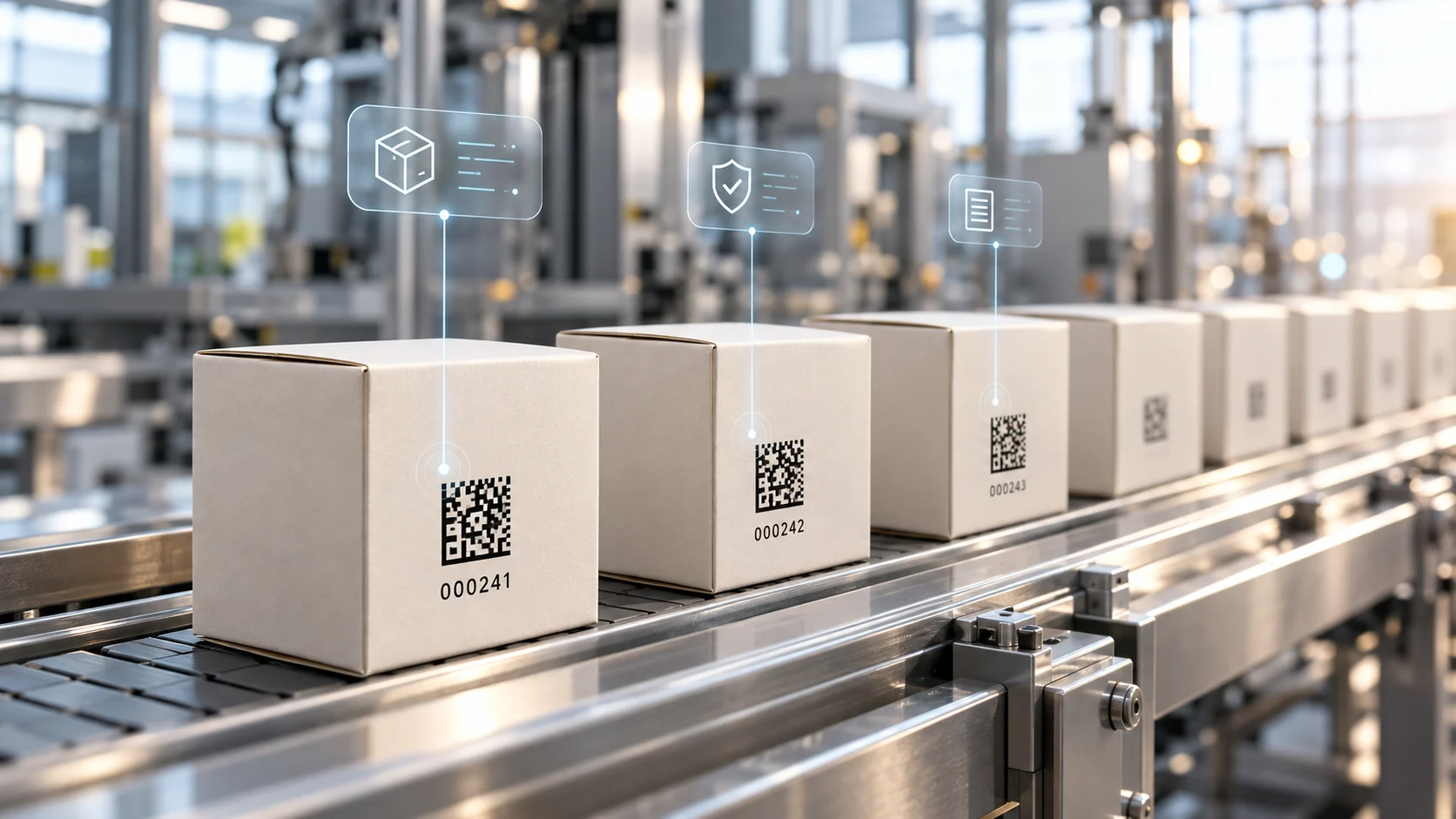
Serialisation is already well established in highly regulated sectors such as pharmaceuticals, but its potential reaches much further. From improved traceability and supply chain visibility to product authentication, targeted recalls, consumer engagement and Digital Product Passports, the ability to identify an individual item rather than simply a product type is becoming increasingly valuable. For manufacturers and brand owners, the challenge is finding an efficient way to create those identities at production speed and potentially enormous scale.
Moving beyond the traditional barcode
Traditional retail barcodes have transformed the way products are managed and sold, but they generally identify a product category rather than an individual item. Two identical bottles of a drink, for example, will typically carry the same barcode. A unique serialised code changes that relationship by giving each bottle its own identity, allowing information and activity to be associated with that specific product.
This creates opportunities throughout the supply chain. A manufacturer can potentially establish when and where an individual product was made, which production line it came from and which batch of materials was used. Its movement through distribution can be recorded, while retailers, regulators and consumers can access different information depending on the application. Packaging effectively becomes a gateway to a much richer digital record.
Greater traceability and authentication
Traceability has traditionally operated at batch level, which remains effective for many applications. Individual product identification, however, can provide considerably greater precision. If a quality issue occurs, manufacturers can potentially identify the specific products affected rather than relying solely on a much wider batch or production window. This level of detail can be valuable when investigating quality issues, managing recalls or demonstrating provenance.
Unique identification can also support product authentication and brand protection. Counterfeiting, product diversion and unauthorised distribution are challenges across sectors ranging from pharmaceuticals and healthcare to cosmetics, electronics and premium consumer goods. A serialised identifier can allow a product to be checked against information held within a digital system, helping businesses or consumers establish whether an item is recognised and whether its journey through the supply chain is consistent with expectations.
Connecting the physical and digital worlds
Unique identification also changes what packaging can do once a product has left the factory. A pack is no longer simply a container carrying static printed information. It can become an interface between the manufacturer, supply chain, retailer and consumer.
Scanning a unique code could provide access to product information, instructions, recycling guidance, authenticity checks, warranty registration or promotional content. Because the identifier relates to an individual item rather than every pack of the same product, brands can potentially create more targeted interactions while using the same infrastructure to support product registration, loyalty programmes and other digital services.
The development of Digital Product Passports adds further momentum to this concept. As regulatory requirements evolve, manufacturers in affected sectors will increasingly need ways of connecting physical products with structured digital information covering areas such as materials, origin, environmental characteristics, repair, reuse and end of life management. Unique identifiers can provide that bridge without requiring every piece of information to be printed directly onto the packaging.
The production challenge
The concept of unique identity is straightforward but delivering it on a high-volume production line is more demanding. A manufacturer may need to create hundreds of thousands or millions of different codes while maintaining production speed, code quality and accuracy. Each identifier must be generated and applied correctly and, where required, connected to the appropriate data system.
This places new demands on coding and marking technology. Instead of repeatedly producing the same image or changing a simple date or batch code, the coding system must rapidly produce variable information from one product to the next. It also needs to integrate effectively with production and data management systems without introducing unnecessary complexity or slowing the manufacturing process.
Where DataLase fits
DataLase technology enables variable information through laser activation of a laser-reactive pigment or coating incorporated within or applied to a product or packaging material. The laser creates a high-contrast, permanent image without applying traditional ink at the point of coding, enabling information to change digitally from one pack to the next.
This makes the technology particularly relevant to variable data and serialisation applications. Unique codes, identifiers, text and graphics can be generated at the required stage of production, creating a physical connection between an individual product and its associated digital information. The ability to produce variable information at production speed can also support late-stage customisation, allowing information to be added closer to the point of manufacture or packaging.
From product identification to product identity
The transition towards uniquely identifiable products will not happen at the same speed in every market. Regulation will drive adoption in some industries, while traceability, brand protection, operational efficiency or consumer engagement will provide the incentive in others. The role coding plays in the packaging process is changing.
Coding and marking are moving beyond simply communicating what a product is and when it was produced. Increasingly, it can link an individual physical product to the digital ecosystem surrounding it. As supply chains become more connected and demand for product-level information grows, the question may no longer be whether every package needs an identity, but how manufacturers can create and manage those identities efficiently at scale.