

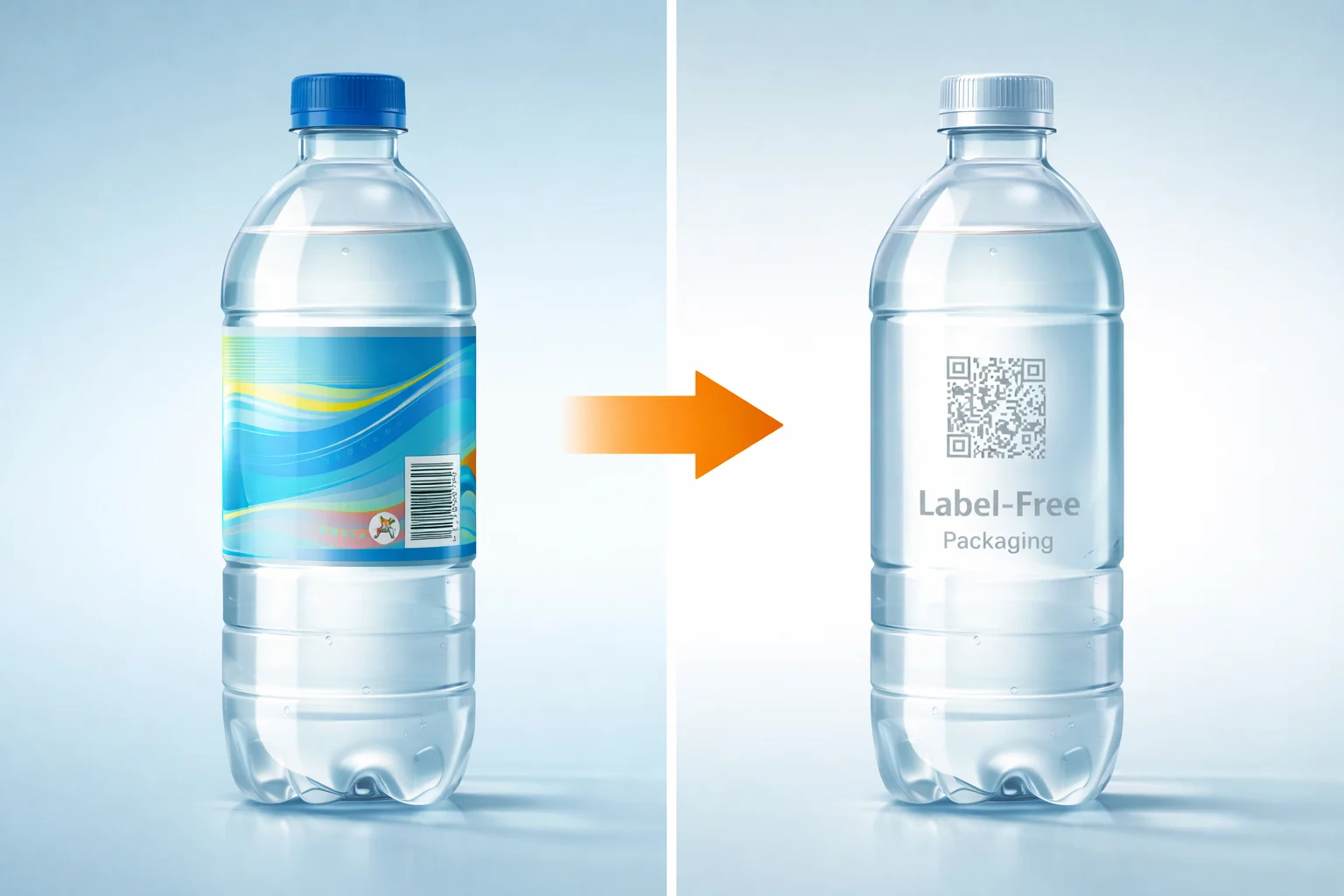
Label-free legislation – preparing beverage packaging for a changing regulatory landscape
Across global beverage markets, packaging legislation is increasingly focused on reducing material use without compromising traceability or safety. Regulatory developments in markets such as South Korea reflect a broader shift towards simpler, more recyclable packaging structures, with growing scrutiny of labels, inks and adhesives that hinder material recovery.
While lightweighting remains important, a quieter but significant trend is emerging- label-free beverage packaging. Driven by environmental policy, extended producer responsibility (EPR) schemes and recycling performance targets, legislation is beginning to shape how information, branding and compliance are delivered on pack.
Why labels are under scrutiny
Traditional paper, filmic and sleeve labels complicate the recycling process. They can interfere with sorting technologies, contaminate PET and aluminium recycling streams, and reduce recyclate quality. As a result, regulators are increasingly emphasising design for recycling, mono-material formats, and the removal of unnecessary components.
Labels are no longer just a branding choice – they are becoming a compliance consideration.
The challenge for beverage brands
Labels currently carry essential functions, including mandatory information, traceability data, barcodes and brand identity. Removing them requires alternative solutions that preserve functionality without adding material.
Industry developments show this is increasingly achieved at the container level, using techniques such as laser marking, embossing and integrated QR codes. These approaches apply information directly to the bottle or can, eliminating the need for a separate label while maintaining compliance and shelf impact.
Opportunities in label-free packaging
In beverage markets, deposit return schemes and recycling targets are increasing pressure on full-body sleeves and adhesive labels, particularly on PET bottles. Label-free solutions enable brands to maintain true mono-material packaging, improve recyclate quality and simplify recycling processes.
For both bottles and cans, label-free marking enables branding, variable data, and traceability without inks, sleeves, or adhesives,thereby supporting circular-economy goals while maintaining production efficiency.
A future-ready approach
Laser-based, label-free marking technologies align closely with evolving legislation by reducing material use, minimising contamination risk and simplifying packaging. They integrate with high-speed beverage lines and support durability, legibility and traceability requirements throughout the product lifecycle.
Looking ahead
Label-free packaging is no longer a future concept. In some regions, legislation already mandates packaging designs that minimise components proven to impair recycling. As regulation shifts from voluntary targets to enforceable requirements, beverage brands must design packaging that meets current rules and anticipates what comes next.
For manufacturers, the message is clear: traditional labels may increase compliance risk, while label-free approaches offer a more resilient, future-ready path in a rapidly changing regulatory landscape.