

Understanding Inkless Printing Technology – How It Works and Why It Matters
In today’s fast-paced and sustainability-focused world, brands are under increasing pressure to reduce waste, streamline operations and make their packaging more environmentally responsible.
Enter inkless printing technology – a revolutionary approach to coding and marking that is transforming how products are labelled across global supply chains. DataLase, the market leader in patented Photonic Printing solutions, is at the forefront of this innovation.
What Is Inkless Printing?
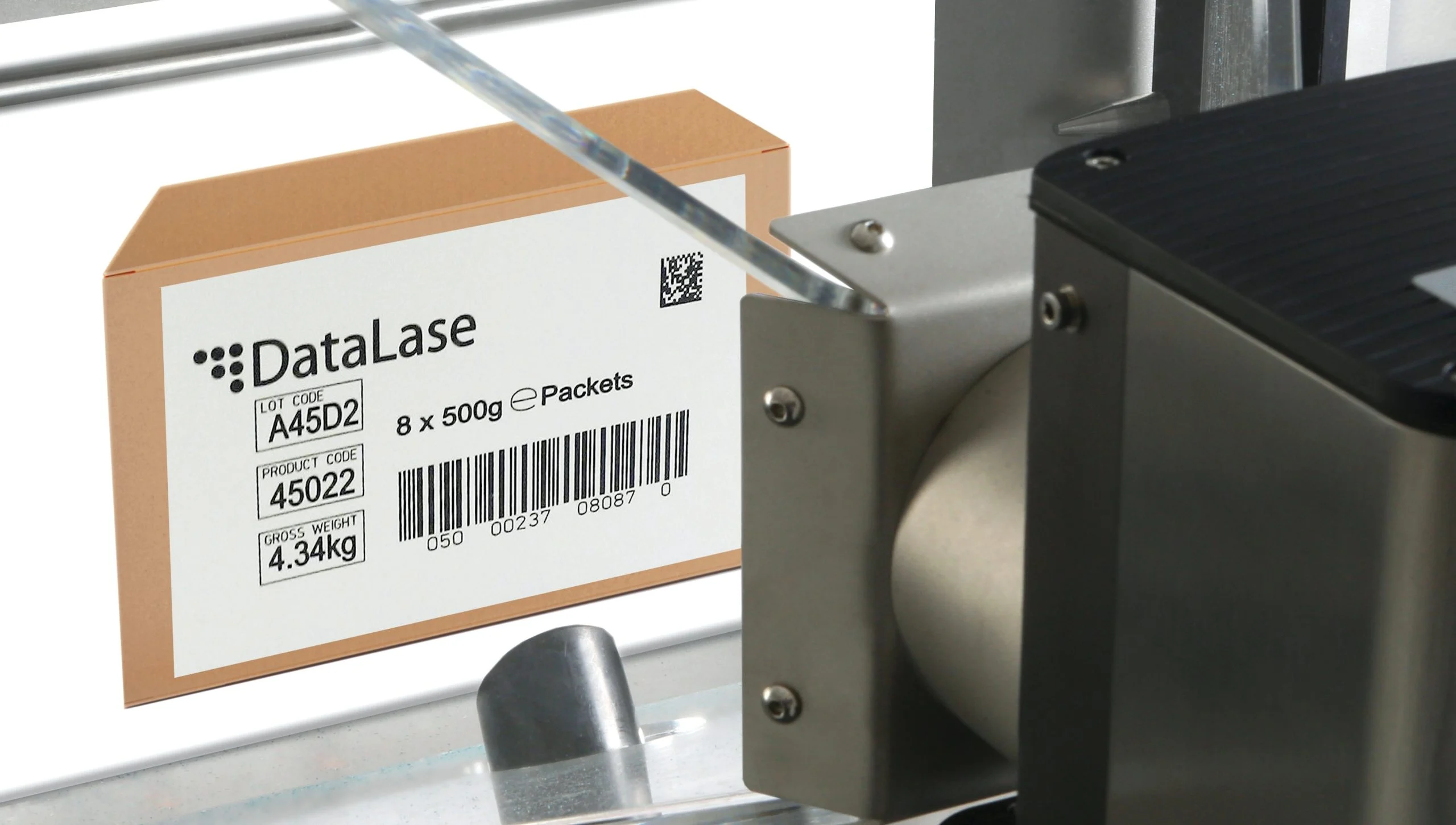
Inkless printing, at the point of coding and packaging, eliminates the need for traditional liquid inks. Instead, it uses a combination of laser energy and a specialised reactive coating applied directly to the packaging substrate. When the laser interacts with the DataLase pigment, it instantly and cleanly produces a high-contrast, permanent mark.
This laser-reactive solution is incorporated into packaging materials during the manufacturing process, enabling on-demand digital printing directly on the production line without the need for consumables such as ink or ribbon.
How Does It Work?
The DataLase inkless printing process can be broken down into three key components:
- Photonic Material – a DataLase pigment is applied to labels, films, cartons, or containers. This pigment serves as the marking medium.
- Laser Activation – a low-energy laser beam selectively activates the pigment, producing an image, code, or text – no ink, no mess, just clean, durable marks.
- On-demand marking is a fast and reliable process, capable of printing variable data in real-time – ideal for batch codes, expiry dates, barcodes and more.
Why Does It Matter?
- Sustainability Gains – By removing ink from the equation, DataLase helps companies significantly reduce packaging waste, eliminate VOC emissions and minimise water usage in printing. Inkless printing is also solvent-free, removing the need for the disposal of ink cartridges or ribbons.
- Speed and Efficiency – DataLase technology facilitates high-speed, high-volume production lines. It allows real-time coding without sacrificing print quality or necessitating line stoppages, thereby minimising downtime and maximising throughput.
- Brand Protection and Traceability – inkless marking is tamper-resistant and highly legible, making it ideal for anti-counterfeiting strategies and supply chain traceability. It enables unique identifiers, QR codes and barcodes to be printed clearly on virtually any substrate.
- Cost and Maintenance Savings – without ink systems to manage, businesses can reduce consumable purchases, decrease maintenance costs and simplify operations. The result? A more streamlined and cost-effective marking process.
- Versatile Applications – from food and beverage to pharmaceuticals, household goods to personal care, DataLase’s solutions are customised to suit a diverse range of industries and substrates, including metal, paperboard, labels and flexible films.
Setting the Standard with DataLase
At DataLase, we aim to help brands deliver sustainable, high-quality, high-speed printing without compromise. Our inkless Photonic Printing solutions are trusted by global companies seeking to innovate responsibly and improve their environmental impact.
Whether improving supply chain efficiency or supporting sustainability goals, inkless technology isn’t just the future – it’s the present.
Discover how DataLase can transform your packaging operations with inkless printing – contact us today.