

Improving food safety and traceability with DataLase’s Photonic Printing technology
In today’s global food industry, ensuring product safety and traceability is more critical than ever. With complex supply chains spanning multiple countries and regulations, maintaining transparency from farm to table is a significant challenge. Enter DataLase’s Photonic Printing technology – an innovative solution set to revolutionise how we track and safeguard our food.
The challenge of food safety and traceability
Food safety incidents pose health risks and can damage brand reputation and consumer trust. Traditional labelling and coding methods can be insufficient due to issues like poor print quality, label tampering and inefficiencies in updating product information. These challenges highlight the need for innovative technologies that can provide reliable, high-quality coding and marking solutions.
What is DataLase’s Photonic Printing technology?
DataLase, a leader in materials science and photonic printing solutions, has developed a unique technology that uses laser-reactive pigments integrated onto packaging materials. When exposed to a laser, these pigments undergo a chemical reaction that produces a high-contrast, permanent mark without the need for inks or labels.
How it works
- Laser-responsive pigments – special pigments are incorporated onto the packaging substrate during the manufacturing process.
- Laser activation – a laser applies energy to the pigment-coated area, triggering a colour change and creating the desired text or image.
- Permanent marking – the result is a high-definition, durable mark that is resistant to abrasion and environmental factors.
Enhancing food safety
DataLase’s technology offers various advantages that directly impact food safety:
- Elimination of ink migration – traditional ink-based printing can lead to ink migration into food products. Photonic printing removes this risk by eliminating the need for inks at the point of packaging.
- Improved hygiene – reducing the use of consumables like inks and solvents minimises contamination risks within production environments.
- Consistent quality – high-resolution, legible codes ensure that vital information such as expiration dates and batch numbers are easily readable, reducing the chance of errors.
Improving traceability
DataLase’s Photonic Printing also enhances supply chain security. By integrating track-and-trace technology, brands can authenticate products and monitor their journey through the supply chain, assuring consumers of product integrity and preventing counterfeiting.
The technology improves traceability in several ways:
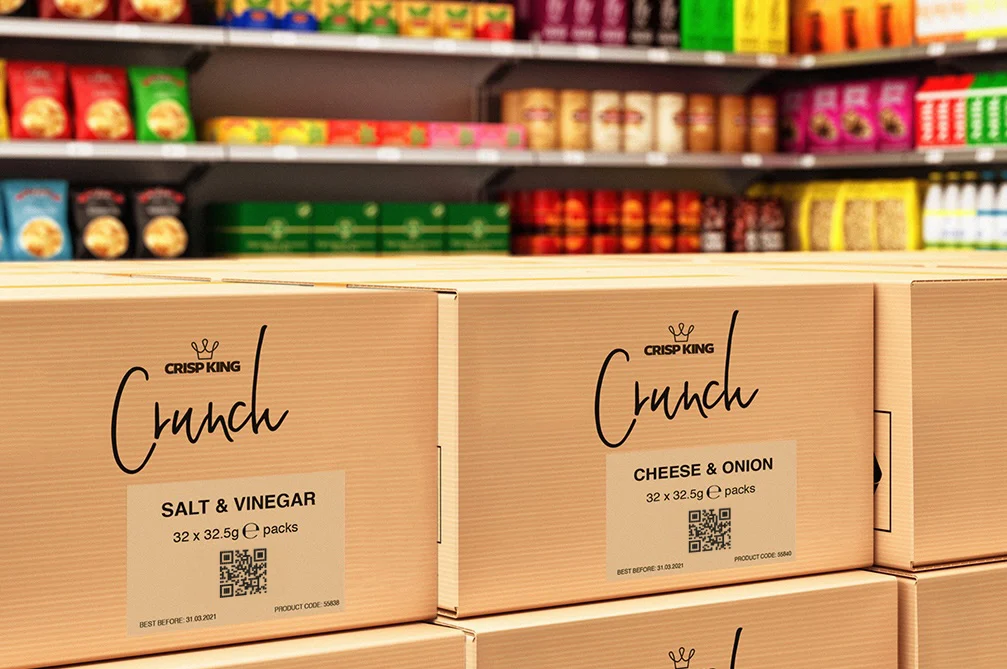
- Real-time variable data printing – manufacturers can print batch numbers, QR codes and other variable data on-demand, facilitating real-time tracking.
- Integration with digital systems – the technology seamlessly integrates with existing supply chain management systems, enabling efficient data sharing and inventory management.
- Tamper-evident features – permanent markings make it easier to detect tampering, enhancing product security.
The company is also exploring the potential of Digital Product Passports (DPP) for consumer products. These would provide a digital record of a product’s lifecycle, from origin to sustainability data, giving consumers transparency and confidence in their purchases.
Environmental and operational benefits
Beyond safety and traceability, DataLase’s technology also offers environmental advantages:
- Reduction in consumables – by eliminating inks and labels, companies reduce waste and the environmental impact associated with their disposal.
- Energy efficiency – the photonic printing process consumes less energy compared to traditional printing methods.
- Operational efficiency – faster printing speeds and reduced downtime for equipment maintenance lead to increased productivity.
As a further endorsement of the technology, DataLase has its approval from Swiss Ordinance (commonly known as ‘Swiss Listing’). Swiss Listing means that they not only comply with the most stringent European packaging regulations, they also continue to meet customers’ demands for the very highest quality in product formulation.
Case studies: Real-world applications
Several leading food manufacturers have adopted DataLase’s technology with impressive results, which include:
- Improved line speeds – companies have reported increased production line speeds due to the elimination of ink drying times.
- Enhanced brand protection – high-quality, permanent codes have helped in combating counterfeit products.
- Cost savings – reduction in consumable purchases and waste disposal has led to significant cost reductions.
The future of food safety with Photonic Printing
As the food industry continues to evolve, the adoption of innovative technologies like DataLase’s Photonic Printing will be instrumental in addressing safety and traceability challenges. By providing a reliable, efficient and eco-friendly solution, DataLase is redefining packaging and coding in the food sector.
Conclusion
Food safety and traceability are non-negotiable aspects of modern food production and distribution. DataLase’s Photonic Printing technology offers a transformative approach that not only enhances these critical areas but also contributes to operational efficiency and environmental sustainability. Embracing such innovations is a step forward in ensuring that consumers have access to safe, high-quality food products they can trust.